What Does a Baler Do?
How does a baler affect storage, transport, labour and feed quality? Concrete gains from packing hay and straw.
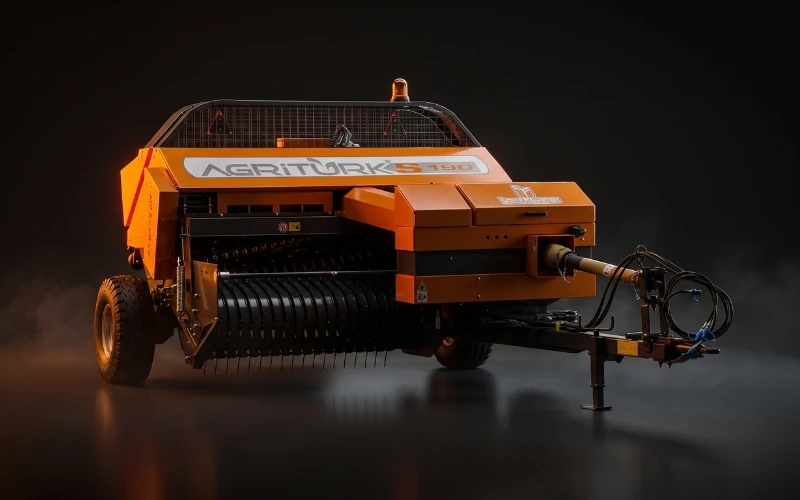
What does a baler do? The short answer: it turns hay, alfalfa stalks and straw in the field into something you can carry, stack and sell. The longer answer is that it changes the farm’s time, shed, transport and feed quality at once. Cut crop left in the field is scattered by wind, soaked by rain and crushed by tyres. The baler closes that risk window; it is the usual way to pack the crop and get it off the land.
The value is not only “packing”. The same hay will not load a truck as a loose heap, will not pass a barn aisle, and cannot be fed steadily through winter. A bale turns forage into a logistics unit. Ürmaksan AGRİTÜRK machines produce that unit for the field: compact 2-twine models for smaller farms, wide-pickup 3-twine lines for high capacity.
It cuts volume and opens the shed
A compressed bale holds the same dry matter in less space. That is real room gained on rent, rack count and fire safety. A loose straw heap both occupies space and lets air and moisture in. Stacked rectangular bales stand like a wall, can be counted and dispatched. Winter feed plans are made in “this many bales”, not heap guesses.
The volume gain multiplies in transport. How many bales fit on a truck is clearly higher than a loose load. As distance grows — straw sold out of the region — that gap changes freight and cost per tonne. A baler is therefore not only a field machine; it is a logistics machine.
Loading, unloading and labour
Piling loose hay by hand is heavy and slow. Bales move by hand, hook, conveyor or loader. Filling a truck with two people is shorter than shovelling a heap. Where the season is tight, labour is the real constraint on finishing harvest. The machine lets the same crew get more crop off the field.
This is not a slogan of “machine instead of worker”. Cutting, raking and haulage still need people. The baler standardises the most tiring, messy link. The operator stays on the tractor, the round finishes, bales lie in a row. If rain threatens that evening, that speed is the difference that saves the crop.
It protects feed and straw quality
Bales compressed at the right moisture lose fewer leaves and make less dust. On alfalfa, leaves carry much of the protein. A row left too long and over-dry breaks on the rake and pickup. Crop baled on time is more palatable and nutritious in winter. On the straw side, clean tied bales turn more easily as bedding or forage in the market.
The reverse of wrong use is real. Wet bales heat, mould and risk animal health. Over-tight, damp packs can even carry a fire risk. A baler only “works” together with settings and field judgement. It does not replace a moisture meter or the farmer’s eye; it buys speed and a chance to lock in quality.
It makes selling and pricing easier
In commercial hay and straw, goods are discussed by bale count and size. Buyers want estimated weight and a stacking pattern, not a “truck heap”. A standard rectangular bale creates a shared language for weighing, stock and invoicing — trust in a regular buyer–seller relationship.
If the farm uses its own feed there may be no sale; internal cost still becomes clearer. How many bales are left for winter, daily use, how long the shed lasts — answered by counting, not guessing. The baler thus ties field work to the farm ledger.
It narrows the weather window
Hay harvest races the weather. Drying time depends on region, wind and windrow thickness. Once dry, the crop must come up at once. The baler is the tool for that short interval. A slow, blocked or often-broken machine leaves a ready row in the field; overnight rain wastes the labour.
So “what it does” is also “how reliably it runs”. Spare parts, authorised service and correct settings are part of the function. Ürmaksan’s dealer and service network exists so the machine stays in the field on harvest day. A baler works; a stopped machine is only weight.
Work at different farm scales
On a small family farm daily need is limited. A compact 2-twine machine with the existing tractor can lift hay and alfalfa stalks. On larger areas, thick rows and custom work, a wide pickup, feeder and 3-twine tying carry the capacity. “What does it do?” widens with whose field you ask: winter feed on one farm, commercial straw on another, hired harvest on a third.
The common point is the same. A baler is the physical bridge from field to shed and barn. Without it, cut hay stays out or moves scattered, costly and poor. With it, the shed fills, the truck fills, winter feed can be counted.
Season plan and machine choice
Benefit is also measured by the choice made before the season. Area to cut, typical windrow thickness, PTO power and bales needed per day should be clear. A machine bought without that either sits idle or blocks. For small plots and thin hay a 2-twine skid line may be enough. Where alfalfa and stalks run thick and goods go out by truck, a wide pickup and 3-twine tying do the real work.
Spare twine, common tines and knotter consumables should sit in the store before harvest. “The machine works” that day means it keeps turning. A day in the workshop can cost several days of labour if a drying row gets wet. So the baler’s job is less the brochure capacity line than staying on its feet all season.
In the end a baler puts storage, transport, labour and feed quality in order at once. How it does that is the next heading: from pickup to knotter, how the machine actually runs in the field.